

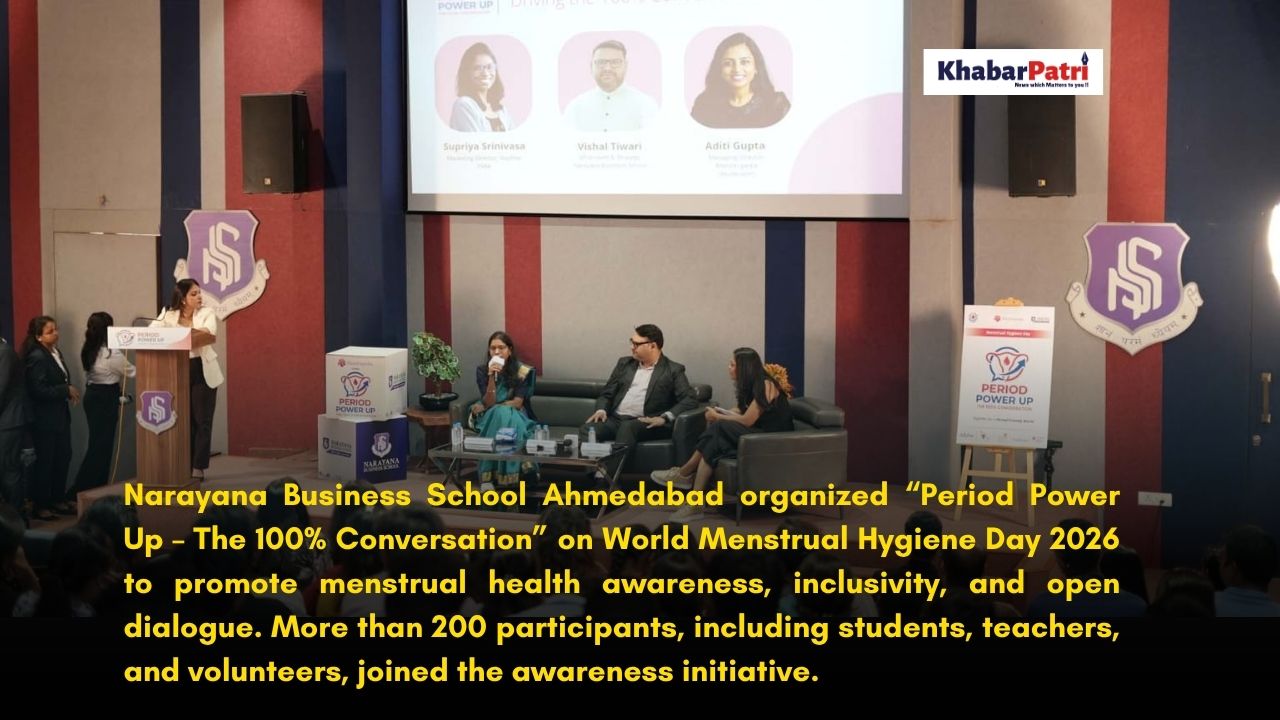
Ahmedabad: Marking World Menstrual Hygiene Day 2026, Narayana Business School (NBS), Ahmedabad, organized “Period Power Up – The 100% Conversation”, a meaningful initiative focused on menstrual health awareness, inclusivity, empathy, and breaking long-standing societal taboos surrounding periods.
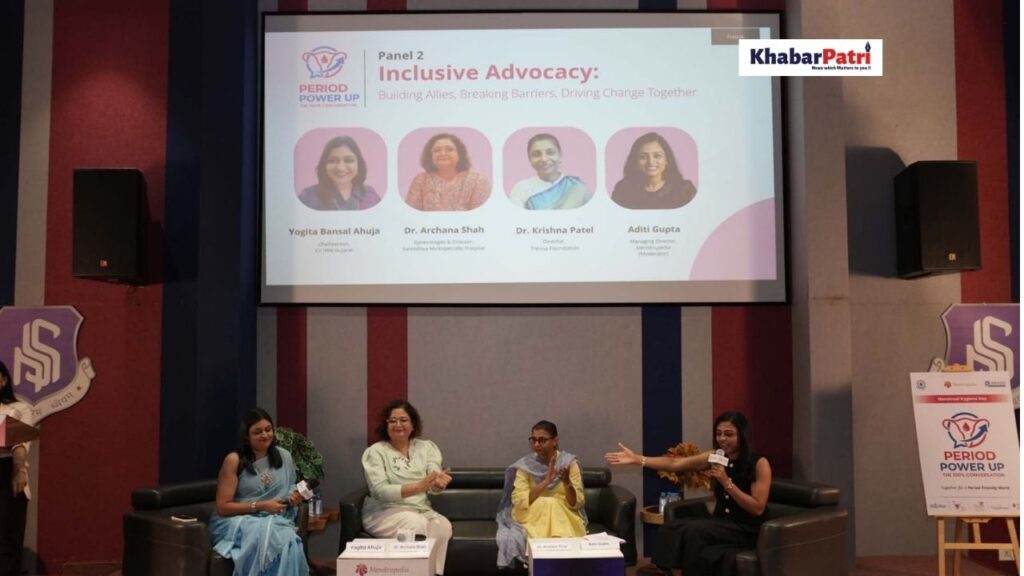
The event was organized in collaboration with Menstrupedia, Stayfree India, CII Indian Women Network (IWN) Gujarat, Tresna Foundation, Sannidhya Maternity & Multispeciality Hospital, PhilComm, SomComm, and the Women Development Cell of NBS. The initiative brought together healthcare professionals, industry leaders, social advocates, students, and alumni to encourage informed conversations around menstrual hygiene and create a more period-friendly society.
The program featured keynote sessions, expert panel discussions, student engagement activities, and interactive conversations aimed at normalizing menstrual health discussions in educational institutions and workplaces. Speakers shared insights on awareness, accessibility, leadership, emotional wellbeing, and the importance of inclusive environments.
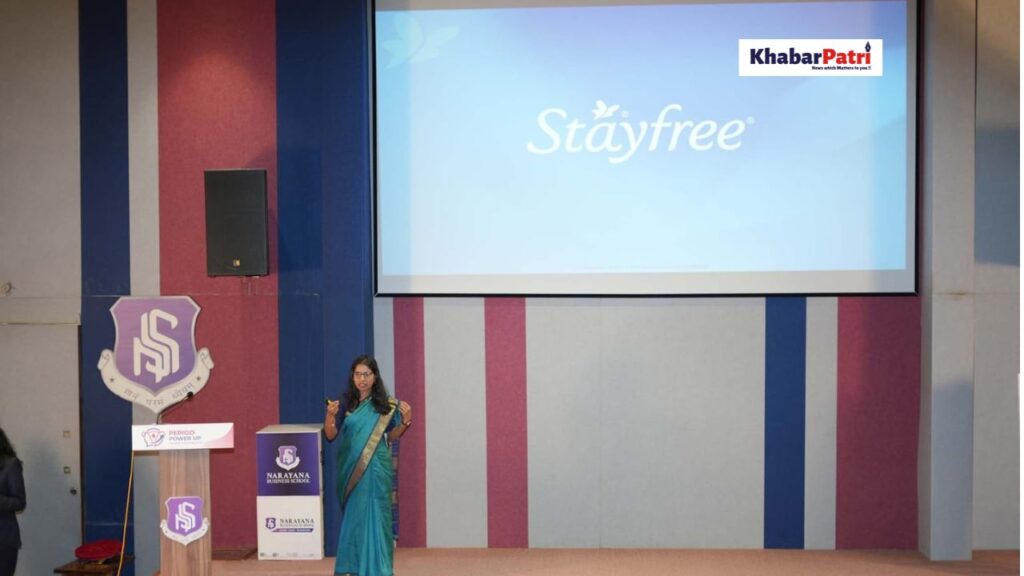
Distinguished speakers included Ms. Supriya Srinivasa from Stayfree India, Ms. Aditi Gupta, Founder of Menstrupedia, Ms. Yogita Bansal Ahuja, Chairperson of CII IWN Gujarat, Dr. Archana Shah, Director of Sannidhya Multispeciality Hospital, Dr. Krishna Patel, Founder of Tresna Foundation, and Mr. Vishal Tiwari, Vice President – Growth & Strategy at Narayana Business School.
Speaking on the occasion, Dr. Purvi Gupta, Dean, Narayana Business School, said, “Menstrual health awareness is not only a health issue but also a matter of dignity, education, and equality. Through such initiatives, we aim to create socially responsible and empathetic future leaders.”
Dr. Amit Gupta, Director, Narayana Business School, added, “Educational institutions have an important role in driving conversations that challenge stigma and inspire positive societal change. ‘Period Power Up’ reflects our commitment toward inclusive and progressive learning environments.”
Adding a unique dimension to the campaign, the event also introduced a special social media challenge encouraging male participation in menstrual health conversations. The initiative aimed to foster empathy, inclusivity, and awareness among young leaders and the larger community.
The event concluded with a collective call for awareness, dignity, empathy, and the normalization of menstrual health conversations as an essential part of society and workplace culture.