

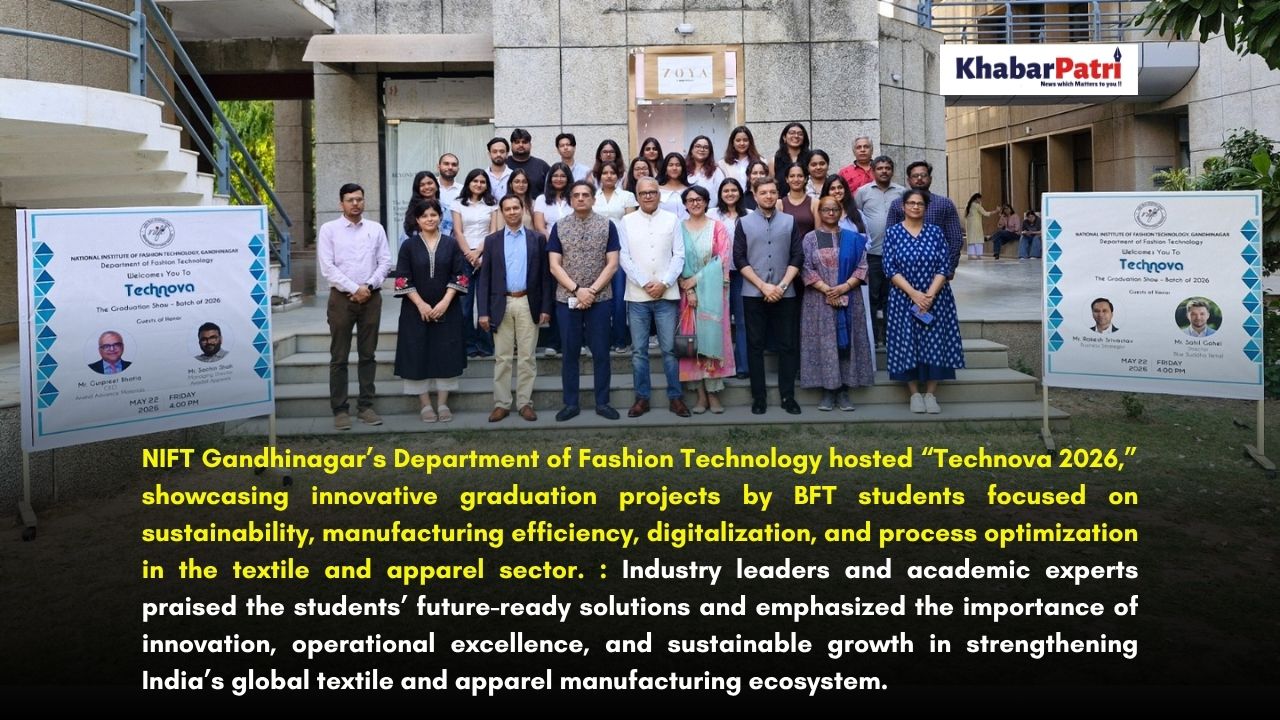
Gandhinagar : The Department of Fashion Technology at National Institute of Fashion Technology hosted “Technova 2026,” the Graduation Project Showcase of the Bachelor of Fashion Technology (BFT) programme, presenting innovative, industry-oriented projects developed by graduating students. Technova 2026 featured the graduation projects of 29 Bachelor of Fashion Technology students, highlighting innovative solutions focused on product development, quality management, supplier selection, process optimization, and manufacturing efficiency. The showcase reflected the students’ technical expertise, strategic thinking, and future-ready approach aligned with the evolving textile and apparel industry.
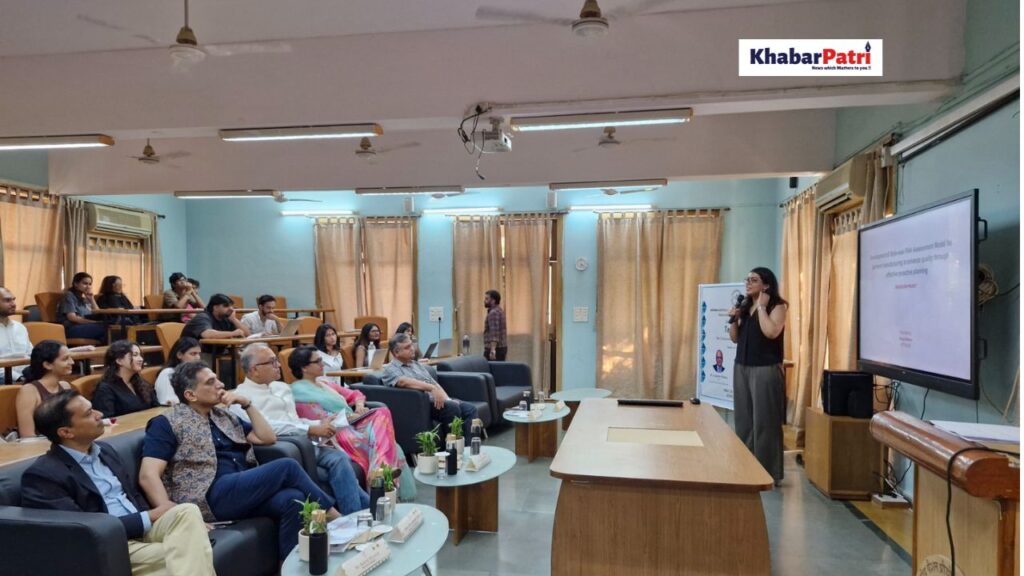
The Bachelor of Fashion Technology programme at NIFT Gandhinagar follows a holistic techno-managerial learning approach that prepares students for leadership roles in the fashion and allied manufacturing sectors by combining technical operations knowledge with industrial and managerial understanding.
The event was inaugurated by Prof. Dr. Sameer Sood, Director, NIFT Gandhinagar, in the presence of distinguished industry leaders including Gurpreet Bhatia, CEO of Arvind Advance Materials; Sachin Shah, Managing Director of Avadat Apparels; Rakesh Shrivastava, Business Strategist; and Sahil Gohel, Director of Blue Buddha Retail. The welcome address was delivered by Aarti Solanki, CC–BFT, who congratulated the graduating batch.
Addressing the gathering, Prof. Dr. Sameer Sood emphasized the critical role of the textile and garment sector in India’s economic growth and its contribution towards the vision of a developed India by 2047. He highlighted the need for technological advancement, operational efficiency, improved productivity, and reduced lead times to strengthen India’s competitiveness in the global apparel manufacturing landscape. He encouraged students to remain committed to innovation, continuous learning, and manufacturing excellence.
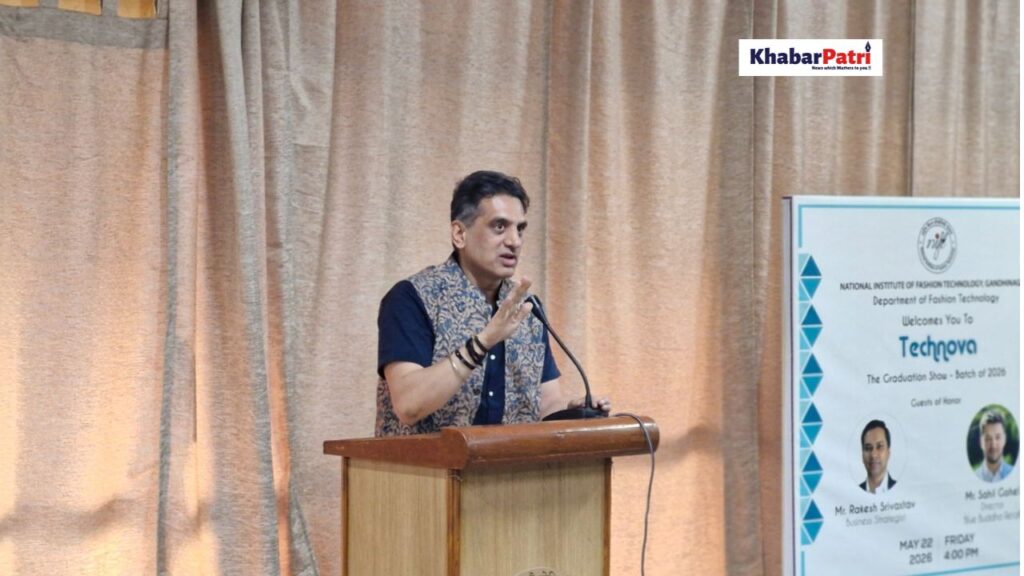
Gurpreet Bhatia appreciated the innovative and industry-relevant projects presented by students and highlighted the growing importance of digitalization, sustainability, operational efficiency, and circularity in the global textile and apparel ecosystem. He noted that the students’ problem-solving capabilities and systems-thinking approach align strongly with future industry demands.
Business Strategist Rakesh Shrivastava advised students to approach the industry with patience, adaptability, and a continuous learning mindset. He emphasized the importance of understanding real-world industry dynamics before implementing academic learnings and encouraged students to remain consistent and growth-oriented in their professional journeys.
Sahil Gohel appreciated the practical and solution-oriented nature of the showcased projects and stressed the importance of Lean manufacturing principles and sustainable systems in improving operational efficiency within the apparel sector. He acknowledged the students’ efforts in addressing critical industry challenges through innovation and process optimization.
Among the featured projects, Anuja Sharma developed a structured style-wise risk assessment framework for garment manufacturing aimed at improving proactive quality planning and reducing production risks. Deepika N. worked on transforming buying operations in luxury retail through Product Information Management integration and data automation frameworks. Onyfa Thulasi G focused on sustainable denim washing alternatives to reduce water and chemical consumption while maintaining garment quality standards.
Other notable projects included Pratyush Bisht’s barcode-based digitization system for garment sampling processes integrated with Breeze and Power BI, and Supraja Thiyagasundaram’s lead-time optimization project at Gokaldas Exports, which achieved a 37.4% reduction in average sampling lead time through process mapping and operational improvements.