

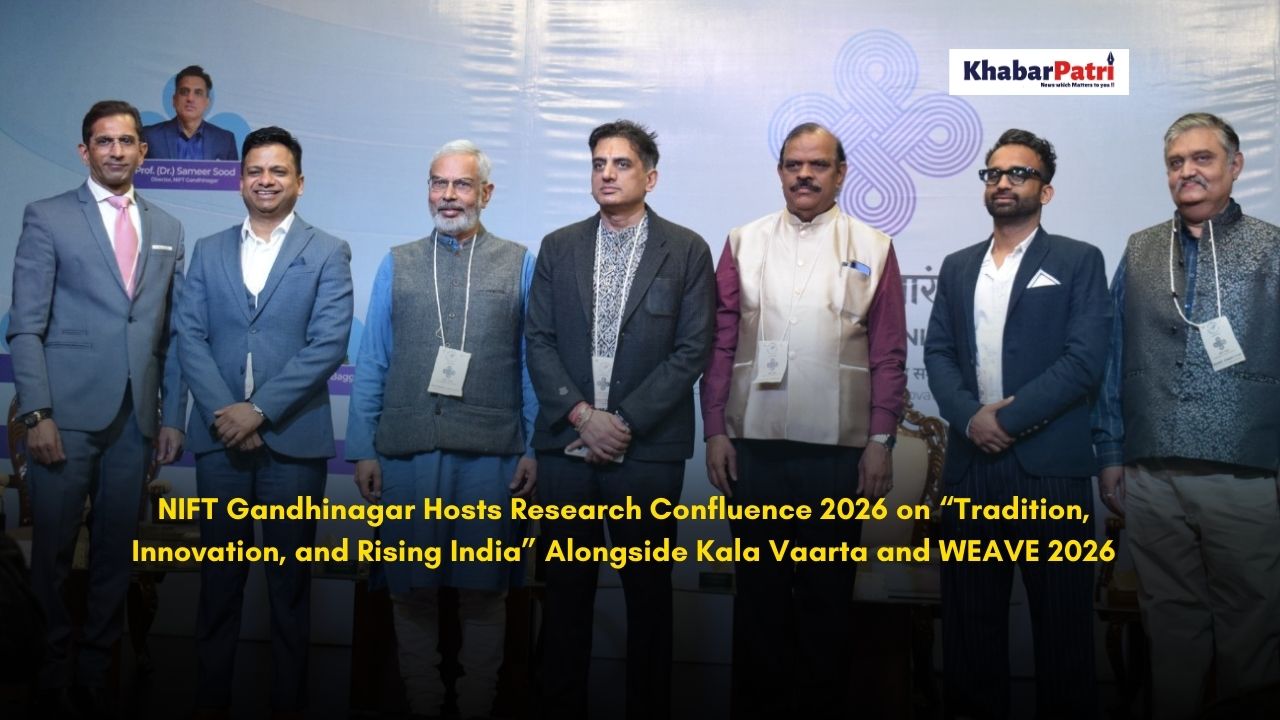
Gandhinagar: National Institute of Fashion Technology Gandhinagar successfully organised Research Confluence 2026 on the theme “Tradition, Innovation, and Rising India”, along with Kala Vaarta and WEAVE 2026 – NIFT Alumni Meet, on 30 January 2026 at its Gandhinagar campus. The programme commenced at 10:00 a.m. with ceremonial lamp lighting and Saraswati Vandana, setting an inspiring and reflective tone for the day.
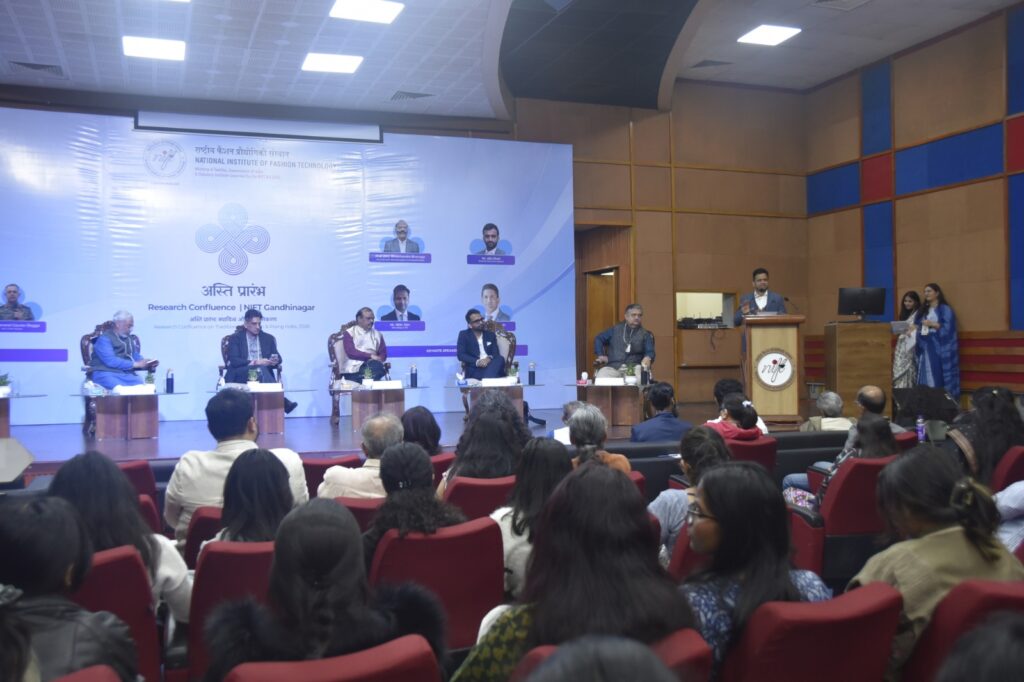
Delivering the Welcome Address, Dr. Sameer Sood, Director, NIFT Gandhinagar, underlined the institute’s commitment to research-led design education, sustainability, and the integration of India’s traditional knowledge with contemporary innovation. He highlighted recent Free Trade Agreements with the European Union and the UK, noting their potential to strengthen India’s textile and apparel sector as a key contributor to the nation’s goal of becoming a developed country by 2047. Referring to the Prime Minister’s vision of the “three Ts”—Textiles, Technology and Tourism—he positioned textiles as the foremost pillar.
Dr. Sood emphasised that textiles are not merely an industrial output but India’s second-largest employment generator, supporting nearly 10 crore livelihoods across 500 districts. He traced India’s historical dominance in global textile trade and urged stakeholders to reclaim leadership through sustainable innovation. Citing successful models such as Tirupur’s wastewater recycling, Panipat’s textile waste recycling, and women-led handloom initiatives, he called for scalable, nationwide replication.
The inaugural session featured keynote addresses by eminent voices from industry and academia, including Shoyeb Hussain Cyclewala (DRYP Fashion Pvt. Ltd.), Alin Shah (Tales & Stories, Artex Apparel), Nitin Jain (Welspun), Dr. Bhalchandra Bhanage (Maharaja Sayajirao University of Baroda), and Karthikeya V. Sarabhai, Founder Director, Centre for Environment Education.
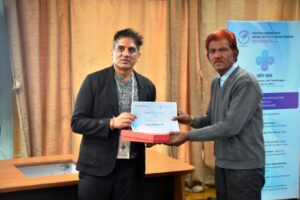
Shri Karthikeya V. Sarabhai shared insights from decades of environmental and textile sector engagement, stressing that tradition and innovation must move together. He highlighted sustainable practices such as high-percentage water recycling, solar drying, and creative reuse of traditional materials, demonstrating how heritage can drive globally competitive, eco-conscious products.
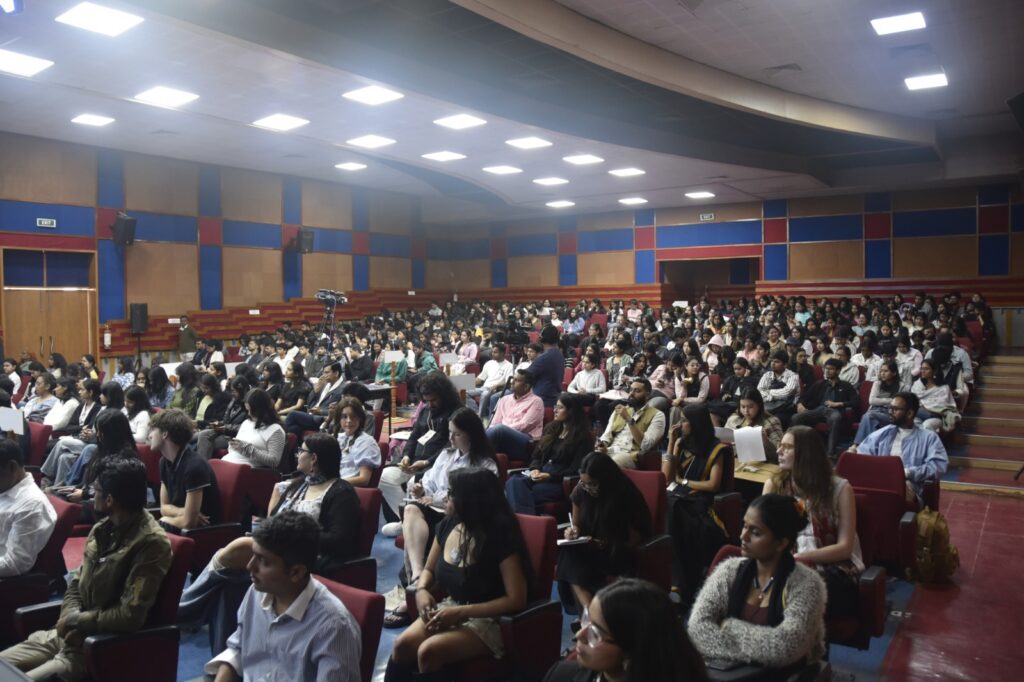
The day-long Confluence saw participation from academicians, researchers, industry leaders, alumni, artisans and creative practitioners. A total of 42 research papers were presented across six thematic tracks, addressing indigenous knowledge systems, ethics, equity, circular design, sustainable supply chains, green technologies, and emerging tools such as AI, blockchain, XR and the metaverse.
A major highlight was Kala Vaarta, an interactive dialogue celebrating artisans’ voices. Padma Shri awardee Lavjibhai Parmar, Majikhan Mutva, Jakir Hussain, and Rohan Vishwakarma shared their journeys, underscoring the resilience and relevance of living craft traditions. Craft and textile exhibitions further enriched the experience.
WEAVE 2026 – NIFT Alumni Meet, themed “Weaving Connections Again”, brought together alumni, students, faculty and industry professionals. The vibrant homecoming featured campus tours, kite flying, cultural performances, band shows and a fashion show showcasing alumni and student creations—celebrating NIFT’s legacy of design excellence.
Overall, Research Confluence 2026 emerged as a powerful platform for knowledge exchange and industry–academia collaboration, reaffirming NIFT Gandhinagar’s role in shaping a future-ready, sustainable design and fashion ecosystem rooted in India’s rich traditions.