

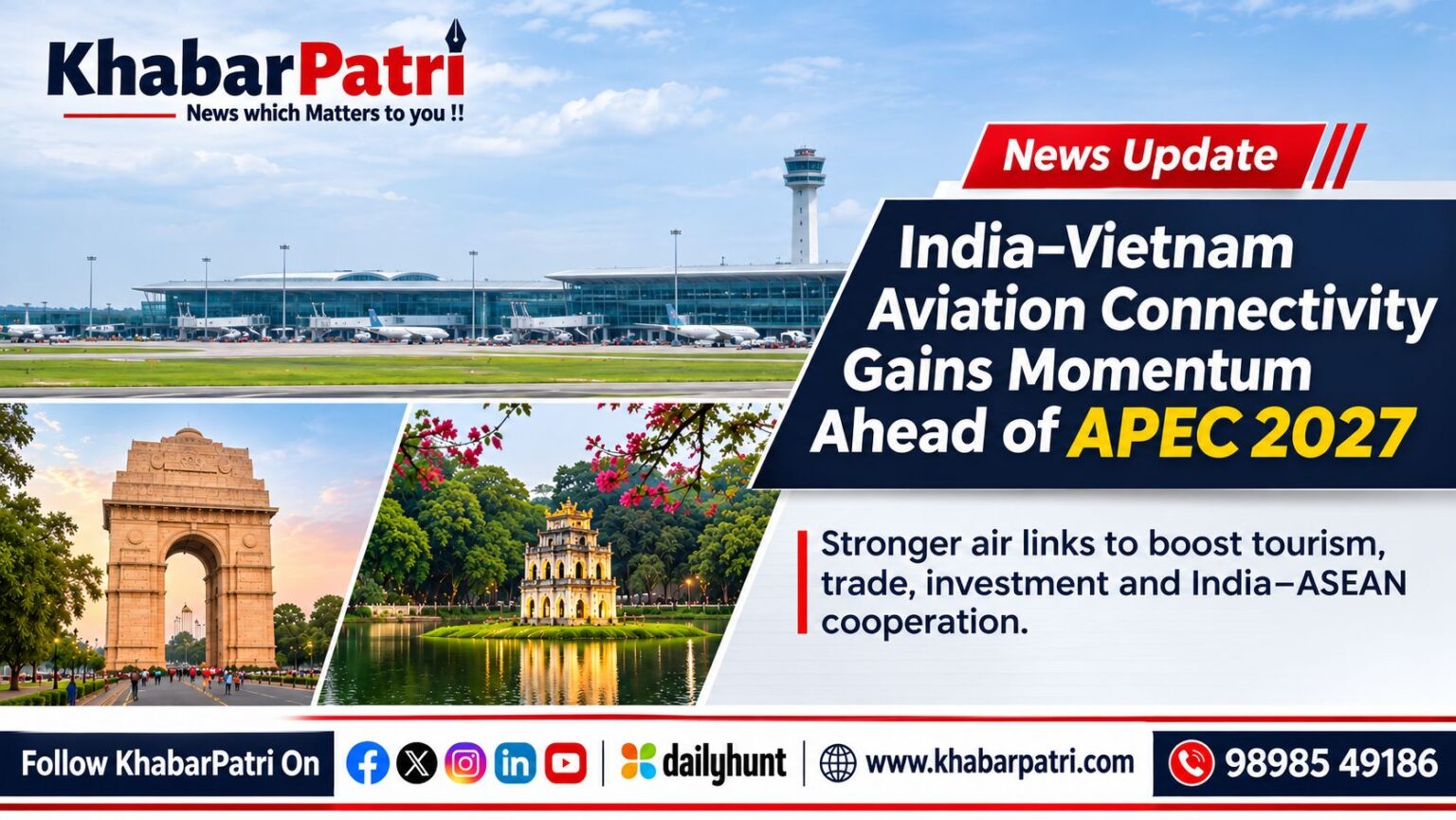
Stronger air links between India and Vietnam could boost tourism, trade, investment and regional business connectivity as Vietnam prepares to host APEC 2027.
NEW DELHI / HO CHI MINH CITY: As Vietnam prepares to host the Asia-Pacific Economic Cooperation (APEC) Economic Leaders’ Week in 2027, strengthening aviation connectivity with India is emerging as an important opportunity to deepen bilateral economic relations and improve access to the wider ASEAN region.
The development assumes greater significance following the participation of Vietnam’s General Secretary and President Tô Lâm in the 33rd APEC Economic Leaders’ Week, held in Shenzhen, China, from November 17 to 20, 2026.
Speaking at the APEC CEO Summit on November 18, Tô Lâm emphasised the importance of an open trade and investment environment, stronger regional connectivity, resilient supply chains and innovation-led growth. He also highlighted the role of businesses in connecting markets, expanding investments and creating sustainable economic value.
These priorities are particularly relevant as Vietnam prepares to host APEC for the third time, following its previous hostings in 2006 and 2017.
Against this backdrop, stronger aviation links between India and Vietnam could translate the regional cooperation agenda into tangible opportunities for tourism, trade and investment.
APEC 2027: Aviation Connectivity as a Strategic Priority
Vietnam’s APEC 2027 chairmanship provides an opportunity to strengthen economic cooperation across the Asia-Pacific region.
The priorities highlighted by Tô Lâm include promoting open trade and investment, encouraging innovation and technology-led growth, and strengthening regional connectivity networks to support resilient supply chains.
Aviation plays an important role in achieving these objectives. Direct air services reduce travel time, facilitate business interactions, support tourism and improve the movement of high-value goods between markets.
For India and Vietnam, improved connectivity can strengthen links between South Asia and ASEAN while creating opportunities for airlines, airports, logistics companies, tourism operators and investors.
India–Vietnam Aviation Market Shows Growth
The growing potential of the India–Vietnam aviation corridor is reflected in the passenger and cargo movement between the two countries.
According to figures cited from Vietnam’s Civil Aviation Authority, airlines operating between Vietnam and India recorded more than 4,400 scheduled flights during the first six months of 2026, carrying approximately 820,400 passengers and over 14,100 tonnes of cargo.
Passenger traffic registered year-on-year growth of 14.7%, while cargo volumes increased by approximately 32%.
This growth reflects expanding engagement between the two countries across tourism, trade, technology, education, investment and cultural exchanges.
Further improvements in direct connectivity could help airlines tap into this growing demand while making travel more convenient for business and leisure passengers.
Vietnam Offers Diverse Experiences for Indian Travellers
Vietnam is increasingly attracting attention in India’s outbound tourism market, offering a combination of natural landscapes, cultural heritage, modern cities, beaches and distinctive cuisine.
From the historic streets of Hanoi and the scenic beauty of Ha Long Bay to the vibrant atmosphere of Ho Chi Minh City, Vietnam offers varied experiences for different categories of travellers.
Some of the key destinations include:
- Hanoi and Northern Vietnam: Cultural heritage, history and natural landscapes.
- Da Nang and Central Vietnam: Beaches, resorts and entertainment.
- Ho Chi Minh City: Business, shopping, urban experiences and nightlife.
- Phu Quoc: Beaches, luxury resorts and family holidays.
The diversity of these destinations makes Vietnam an attractive option for Indian families, leisure travellers, honeymooners, corporate groups and luxury tourism segments.
Vietnam’s Role in Strengthening India–ASEAN Tourism
The opportunity extends beyond bilateral travel.
According to the ASEAN–India Tourism Ministers’ Joint Statement issued in January 2026, approximately 5.9 million Indian travellers visited ASEAN in 2024, while approximately 4.7 million travelled to the region between January and September 2025.
These figures underline India’s importance as an outbound tourism market for Southeast Asia.
Vietnam is well positioned to benefit from this demand through its international aviation gateways in Hanoi, Ho Chi Minh City and Da Nang, along with the growing international profile of Phu Quoc.
The country can also serve as an entry point for multi-destination travel across Cambodia, Laos, Thailand, Singapore and Malaysia.
This creates an opportunity for Vietnam to position itself not only as a standalone holiday destination but also as a connecting gateway for wider Southeast Asian tourism.
Aviation Connectivity Can Strengthen Trade and Investment
Tourism is only one part of the growing India–Vietnam opportunity. Both countries have complementary strengths across manufacturing, information technology, digital services, pharmaceuticals, renewable energy and infrastructure.
Improved air connectivity between Vietnam’s major cities and Indian business centres such as Bengaluru, Hyderabad, Ahmedabad and Mumbai could facilitate corporate travel, industry partnerships and investment interactions.
Western India’s manufacturing, financial and industrial sectors could particularly benefit from improved connectivity with Vietnam’s expanding business ecosystem.
The reported 32% growth in bilateral cargo volumes during the first half of 2026 also highlights the increasing role of aviation in supporting commercial exchanges.
Greater cooperation in airport infrastructure, cargo handling, logistics and aviation services could further strengthen trade relationships.
Stronger India–Vietnam Air Links Could Shape Regional Opportunities
As Vietnam moves towards hosting APEC 2027, stronger aviation connectivity with India can become an important part of its wider regional integration agenda. Improved air links can connect more cities, facilitate business partnerships, encourage tourism and support the movement of goods across markets.
For India, Vietnam represents an important gateway to ASEAN. For Vietnam, India offers a significant tourism, investment and commercial market. Strengthening this aviation corridor could therefore create opportunities extending beyond the two countries, bringing South Asia and Southeast Asia closer through improved regional connectivity.