

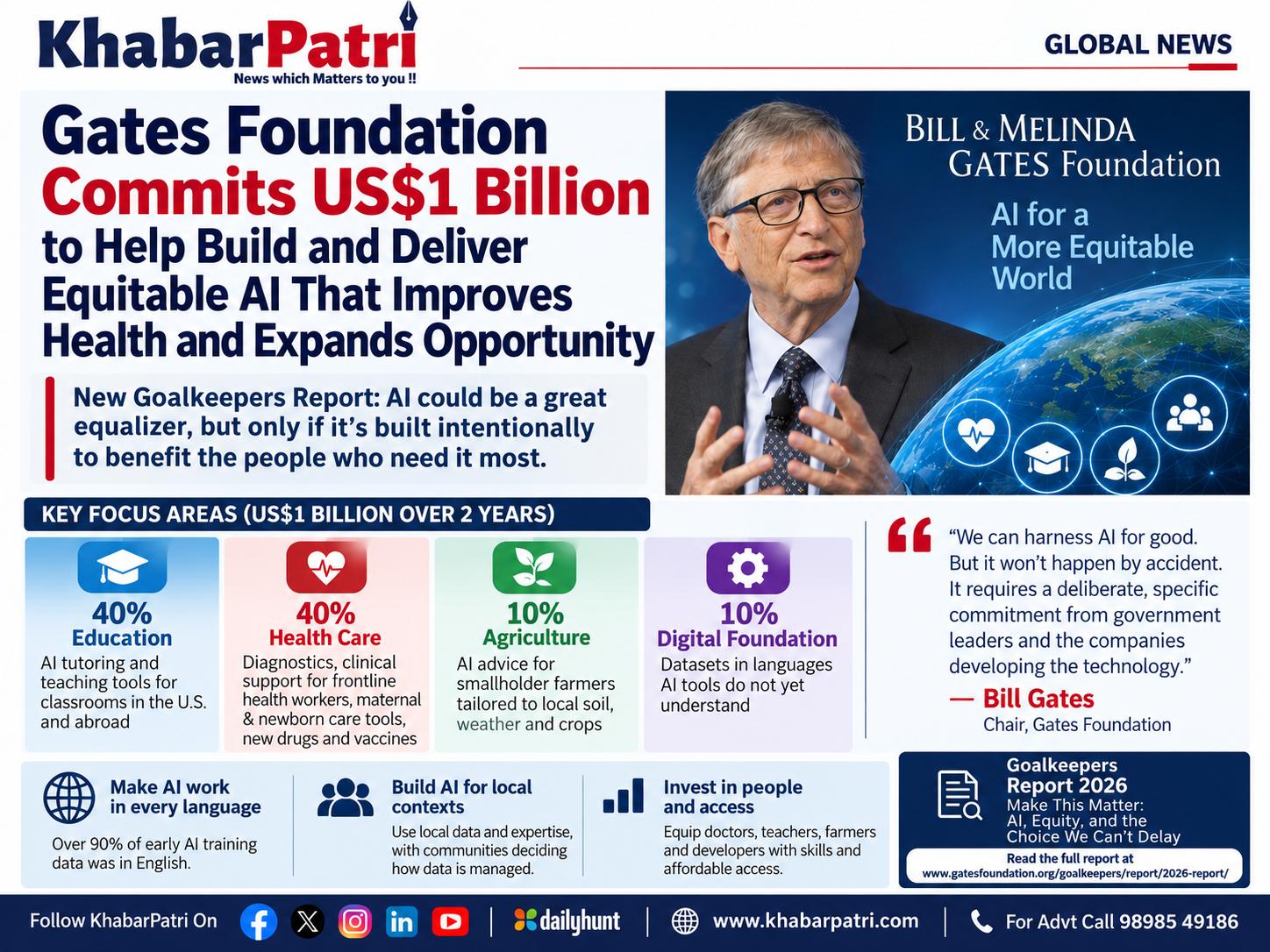
Seattle : The Gates Foundation has announced plans to invest at least US$1 billion over the next two years to expand access to artificial intelligence (AI) and AI-enabled solutions, knowledge and opportunities, with a focus on ensuring that the benefits of AI reach communities that have historically had limited access to emerging technologies.
The announcement coincides with the launch of the foundation’s 10th annual Goalkeepers Report, titled “Make This Matter: AI, Equity, and the Choice We Can’t Delay.” The 2026 report examines how AI could help reduce inequalities between wealthier and lower-income communities, provided that the technology is developed and deployed with equity and inclusion as priorities.
According to the foundation, AI is already being used by partners in areas including healthcare, education and agriculture. However, it cautions that without deliberate efforts to address disparities in access, data representation and digital infrastructure, the rapid development of AI could widen existing gaps.
Bill Gates, Chair of the Gates Foundation, said in the report that AI presents a challenge similar to the market failures the foundation has sought to address through its work, but at a significantly faster pace. He noted that leaving AI development solely to market forces could result in the most advanced tools being developed primarily for users and institutions that are able to pay for them, rather than for communities with the greatest potential need.
Three Priorities for Equitable AI
The 2026 Goalkeepers Report identifies three key areas where action could help make AI more accessible and relevant to people around the world.
Making AI work across languages:
The report highlights the need for AI systems to better support the many languages spoken globally. It notes that more than 90% of the data used to train early large language models came from English-language sources, potentially limiting the effectiveness of AI tools for communities whose languages and experiences are underrepresented.
Developing AI for local contexts:
The foundation emphasizes the importance of incorporating local data, knowledge and expertise when developing AI solutions. Countries and communities should also have a role in determining how their data is managed, protected and used.
Investing in people and access:
Doctors, teachers, farmers and developers need opportunities to understand, evaluate and adapt AI tools for their own environments. The foundation also highlights the importance of affordable access to AI technology, requiring contributions from governments, technology companies and philanthropic organizations.
Funding Focus
The Gates Foundation said its planned US$1 billion commitment will support partners working to improve access to AI and develop tools that reflect the needs and priorities of underserved communities.
The funding is expected to be distributed approximately as follows:
- 40% for education, including AI-powered tutoring designed to support personalized learning and teaching tools for classrooms in the United States and other countries.
- 40% for healthcare, including diagnostic and clinical decision-support tools for frontline health workers, maternal and newborn care solutions, and research into new drugs and vaccines.
- 10% for agriculture, including AI-generated advice for smallholder farmers tailored to local soil, weather and crop conditions.
- 10% for digital foundations, including datasets designed to improve AI capabilities in languages and contexts that remain underserved.
The foundation is also calling on governments, technology companies, philanthropies and other stakeholders to contribute resources, expertise and leadership toward making AI more useful, accessible and affordable.
Bill Gates emphasized that ensuring AI delivers broad social benefits will require deliberate action rather than relying on technological progress alone. The report argues that the success of AI should be measured not only by what it can deliver for the most profitable users, but also by its ability to improve outcomes for people who have the most to gain from the technology. The 2026 Goalkeepers Report is available through the Gates Foundation’s official Goalkeepers platform.