

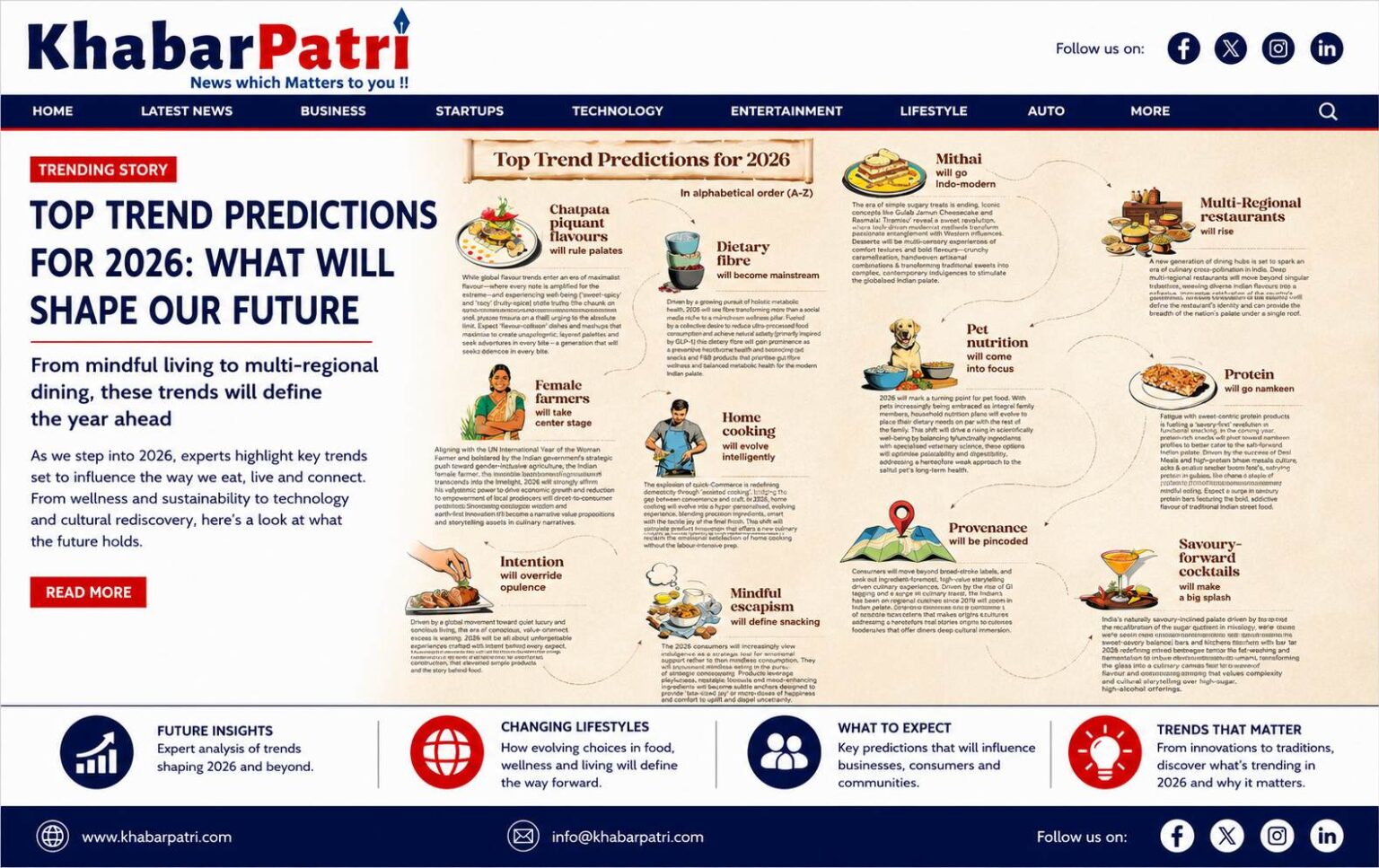
Ahmedabad: Godrej Vikhroli Cucina unveiled the ninth edition of the World Gourmand Award-winning Godrej Food Trends Report (GFTR) 2026 during its flagship event, Tasting India: Culinary Conversations, held in New Delhi. This year’s report, themed “Stories,” explores how food is increasingly being experienced beyond taste through provenance, cultural memory, sustainability, and human connection.
Among the regional narratives featured in the report, Gujarat stands out for its vibrant food traditions that seamlessly blend heritage, community, and everyday rituals. The report highlights the state’s enduring chai and nasto culture, where a cup of masala chai is often accompanied by an array of beloved snacks such as chevdo, sev, ganthiya, sev-mamra, dhokla, patra, and khandvi. These culinary traditions continue to reflect Gujarat’s strong sense of community, comfort, and cultural continuity.
GFTR 2026 identifies several emerging trends shaping India’s culinary future, including the rise of chatpata and piquant flavours, the growing influence of women farmers, the evolution of mithai into Indo-modern formats, protein-rich namkeen innovations, and smarter approaches to home cooking. Together, these trends signal a broader shift toward conscious consumption, regional pride, and food experiences rooted in authenticity.
A notable Gujarat-based example featured in the report is the work of Wild Jai Farm in promoting GI-tagged Gir Kesar mangoes. Through a focus on traditional farming methods, natural ripening processes, and sustainable agricultural practices, the farm has successfully highlighted the importance of provenance and heritage in preserving the unique flavour profile and cultural significance of one of India’s most celebrated mango varieties.
Sharing his insights on the evolving food landscape, Kunal Kapur said, “2026 will be the year when health, heritage, and responsibility come together on the menu. Diners are actively gravitating towards food that is real, responsible, and restorative, and chefs are responding with more creativity than ever. As the industry moves away from imported luxury towards celebrating local produce and regional flavours, we will witness greater use of seasonal ingredients, wider adoption of sustainable practices such as zero-waste cooking and mindful sourcing, and a renewed appreciation for traditional wisdom and culinary heritage. Storytelling, forgotten recipes, and ingredients that carry cultural identity forward will increasingly enrich menus and dining experiences.”
The report underscores a growing movement within India’s food ecosystem where local ingredients, traditional practices, and authentic narratives are becoming central to culinary innovation. For Gujarat, this means that its rich gastronomic heritage—from street-side chai rituals to prized Gir Kesar mangoes—is not only preserving cultural identity but also helping shape the future of food in India.