

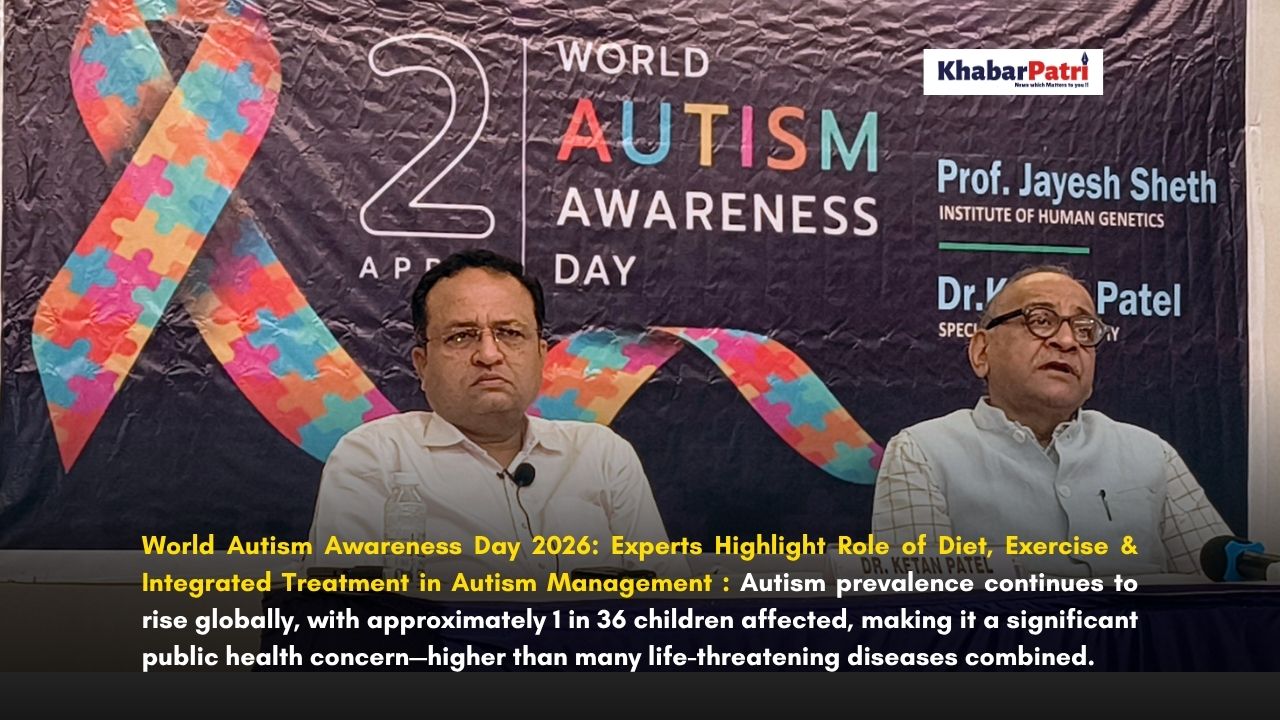
Ahmedabad : On the eve of World Autism Awareness Day (April 2), leading medical experts in Gujarat emphasized the critical role of diet, exercise, and individualized treatment protocols in managing autism spectrum disorder (ASD).
Addressing the media, Dr. Ketan Patel, Founder of Specialty Homeopathy, stated that “nearly 80% of autism cases can be significantly improved through structured diet and exercise interventions, while approximately 20% require additional medical support due to genetic and metabolic factors.”
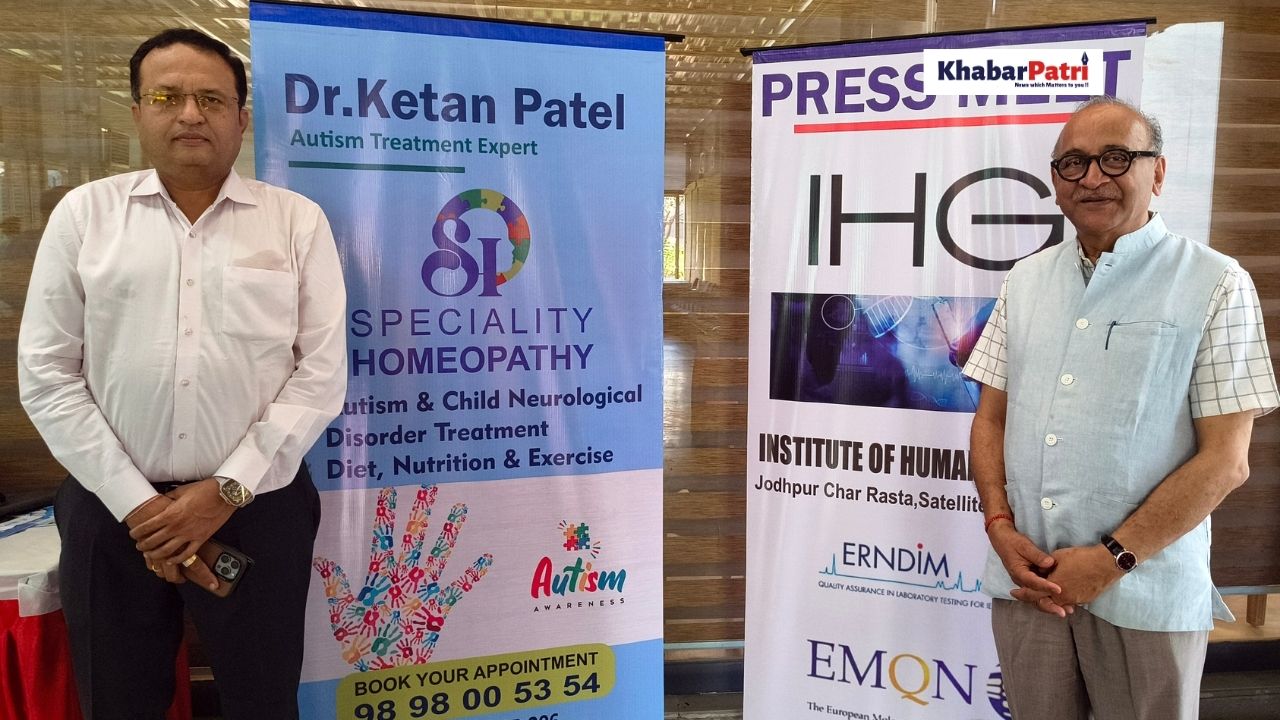
He further highlighted that homeopathic treatment has shown promising outcomes in cases involving genetic, metabolic, and mitochondrial dysfunction (Syndromic Autism). According to Dr. Patel, up to 90% of gene-related disruptions—such as sodium, potassium, and neurological channel irregularities—can be effectively managed with a combination of therapies.
Need for India-Centric Autism Treatment Protocols
Dr. Patel stressed the importance of developing India-specific treatment frameworks, noting that Western protocols often lack time-bound effectiveness and that India faces a shortage of specialized autism practitioners. He called for integrated approaches combining diet, therapy, and personalized care plans.
Early Diagnosis is Critical
Dr. Jayesh Sheth, an expert in genetic, metabolic, and mitochondrial diagnostics, explained that autism is not a condition of intellectual disability but rather a neurological wiring disruption affecting communication and behavior.
He added that:
- Around 50% of autism cases are linked to genetic factors
- Early diagnosis (18–24 months) significantly improves outcomes
- Timely intervention can greatly enhance a child’s developmental trajectory
₹5 Lakh Annual Support for Underprivileged Children
In a notable humanitarian initiative, doctors in Gujarat are currently providing financial assistance of up to ₹5,00,000 annually for the treatment, genetic testing, and therapy of over 100 underprivileged children affected by autism.
Experts also announced plans for collaborative efforts across medical systems—including Allopathy, Homeopathy, and Ayurveda—to accelerate research and improve treatment outcomes.
Rising Global Concern
Autism prevalence continues to rise globally, with approximately 1 in 36 children affected, making it a significant public health concern—higher than many life-threatening diseases combined.
Common Signs of Autism
Parents are advised to consult specialists if children exhibit:
- Delayed or absent speech development
- Lack of eye contact
- Preference for solitary play
- Repetitive behaviors (e.g., hand movements, fixation on objects)
- Sensitivity to sound
- Unusual emotional responses or self-harm tendencies