

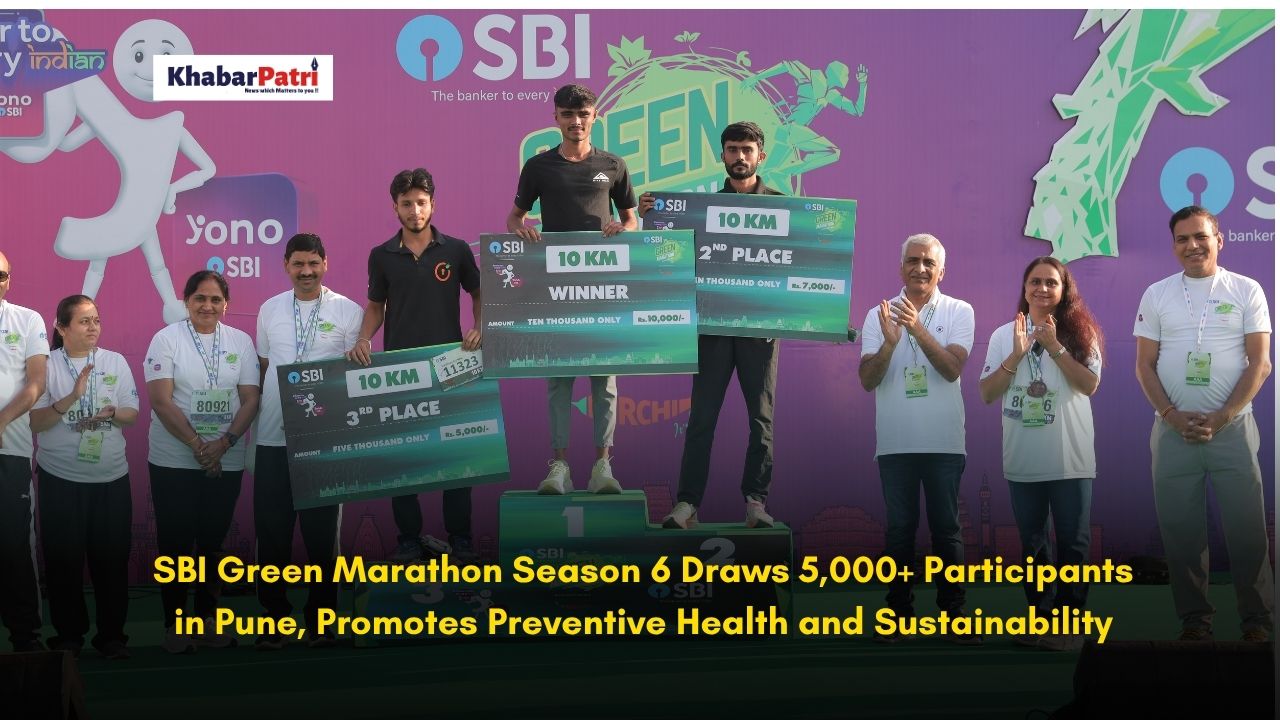
Pune: The Pune leg of the SBI Green Marathon Season 6 recorded participation from over 5,000 runners, underlining the growing convergence of preventive healthcare awareness and sustainability-led public initiatives in urban India.
Organised as part of a multi-city national campaign, the event brought together amateur and experienced runners, students, families, and members of the defence community at the PWD Ground. The initiative aligns with broader efforts to promote active lifestyles as a means to address rising non-communicable diseases (NCDs) such as obesity, diabetes, and cardiovascular conditions.
Pune, known for its expanding running communities and wellness-oriented demographic, has emerged as a key hub for participatory fitness events. The turnout reflects increasing public awareness around structured physical activity as part of daily life, particularly in metropolitan centres. The marathon featured three categories — 5 km, 10 km, and half marathon — catering to a broad participant base. The routes were AIMS-certified, ensuring adherence to international standards of distance accuracy and runner safety. Senior officials from State Bank of India flagged off the event, signalling continued institutional support for initiatives that combine public health messaging with environmental responsibility.
The programme forms part of SBI’s ongoing outreach efforts aimed at encouraging behavioural change through large-scale community participation, particularly in areas linked to health, fitness, and sustainability. Organisers incorporated multiple eco-conscious interventions to reduce the environmental footprint of the event. These included the use of organic fabric T-shirts, plantable BIBs, and reusable cloth bags, alongside structured waste management systems focused on segregation and responsible disposal. Such measures are increasingly being adopted across large-format public events, reflecting a shift towards environmentally responsible event management practices.
Events such as the SBI Green Marathon are gaining traction as platforms for advancing preventive healthcare narratives. By integrating fitness with community participation, they serve as low-barrier entry points for individuals to adopt active lifestyles. In addition to physical health benefits, such gatherings contribute to social cohesion and reinforce awareness around sustainable living practices.