


Gandhinagar: The National Institute of Fashion Technology (NIFT) Gandhinagar successfully organized a two-day Craft Bazaar and Live Demonstration on March 19–20, 2026, under its Craft Cluster Initiative, creating a meaningful intersection of education, design learning, and artisan empowerment.
Guided by Dr. Sameer Sood, Director, NIFT Gandhinagar, the initiative was designed to provide students with experiential learning opportunities while enabling traditional artisans to access wider markets and visibility. The event brought together master artisans, including several national awardees, representing diverse craft traditions from across India. It offered a unique platform where students, designers, and visitors could directly engage with artisans, fostering knowledge exchange and a deeper understanding of India’s rich craft heritage.


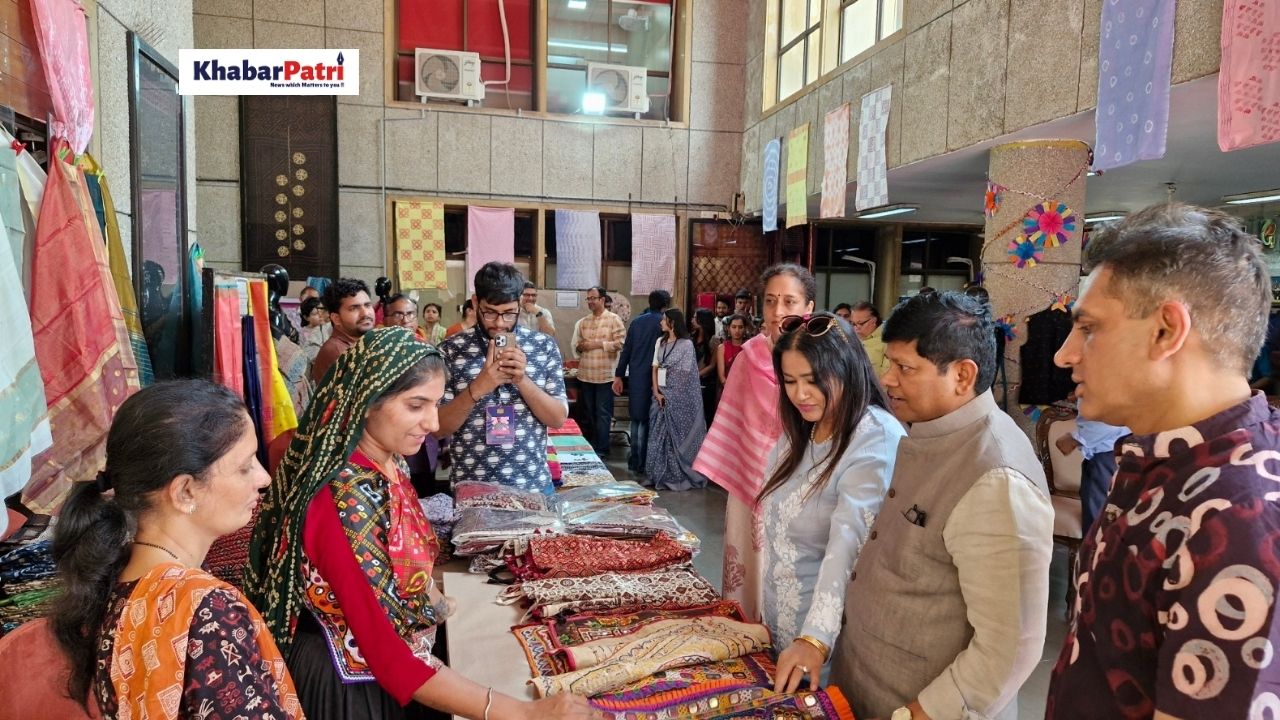


Addressing the gathering, Dr. Sameer Sood emphasized the importance of integrating traditional knowledge systems into contemporary design education. He noted that such initiatives help students develop a holistic perspective while contributing to the sustainability of indigenous crafts and artisan livelihoods.
The Craft Bazaar featured a diverse range of traditional crafts such as Ajrakh Print (Barmer), Leather Craft (Jodhpur), Gulabi Meenakari (Varanasi), Kharad Weaving (Kutch), Appliqué and Patchwork (Ahmedabad), Jawaja Dhurries (Beawar), Batik (Kutch), Copper Bell Craft (Kutch), Mudwork (Bhuj), Maheshwari and Chanderi textiles, Single Ikat (Surendranagar), and Suf Embroidery (Kutch), among others.
The event was graced by Shri Mohammad Shahid, IAS, Commissioner and Principal Secretary, Cottage and Rural Industries, Government of Gujarat, as the Chief Guest. He highlighted Gujarat’s strong legacy in textile and craft traditions and underscored the importance of institutional collaborations in strengthening artisan ecosystems.
A major highlight of the event was the live craft demonstrations conducted by skilled artisans, including Saudagiri Hand Block Printing, Leather Craft from Sumrasar (Bhuj), Dabu Printing (Deesa), Wood Carving (Kutch), Batik (Mandvi), Molela Terracotta (Udaipur), and Suf Embroidery (Kutch). These sessions provided students with hands-on exposure to traditional techniques, materials, and processes, enriching their academic learning with real-world insights.
In addition, an Artisan Awareness Workshop was organized to support the professional growth of artisans. The workshop focused on areas such as design innovation, market trends, sustainability, and community development, aiming to enhance their adaptability and long-term viability in evolving markets. By combining academic engagement with grassroots participation, the initiative reaffirmed NIFT Gandhinagar’s commitment to preserving India’s craft heritage while nurturing future designers and empowering artisan communities through knowledge sharing, capacity building, and market integration.