

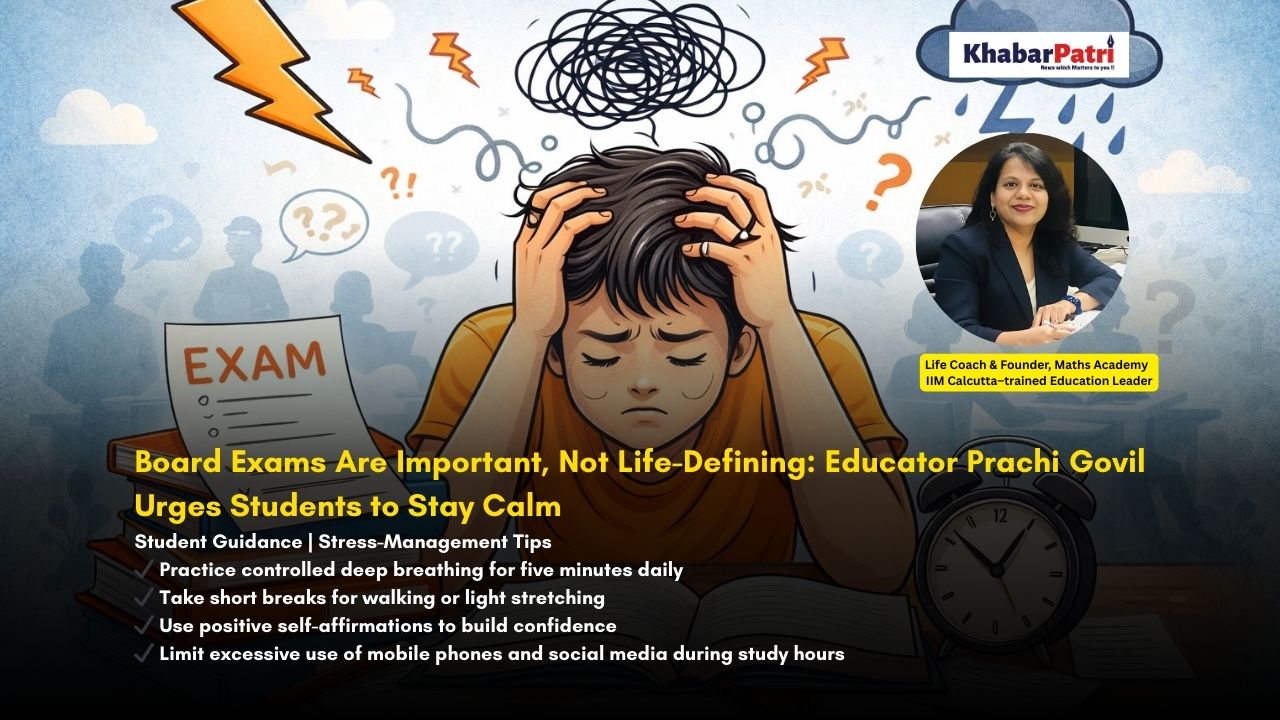
Board Exams Matter — But They Do Not Define a Student’s Future
Ahmedabad: Board examinations mark an important academic milestone for students across the country. However, the period leading up to these exams is often accompanied by intense pressure, anxiety, and self-doubt. Extended study hours, academic comparisons, and expectations of high scores frequently contribute to emotional stress, which can affect both learning outcomes and confidence.
Riya, a Class 10 student, recalls experiencing constant anxiety during her board exam preparation. “I believed that scoring below 90 percent would limit my future opportunities,” she said. Despite securing average marks in her board examinations, Riya has gone on to build a successful career as a graphic designer. Today, she works confidently in a field aligned with her interests and strengths. Her journey reinforces an important message for students — examination scores alone do not determine future success.
Education professionals emphasize that while board examinations play a significant role in academic assessment, they do not measure a student’s intelligence, creativity, or long-term potential. Exams evaluate subject preparedness at a specific point in time, not an individual’s overall capabilities or life prospects.
Exam Stress: A Common but Manageable Challenge
Experiencing stress before examinations is both common and natural among students. Symptoms such as nervousness, increased heart rate, sweating, and momentary memory lapses are normal physiological responses to academic pressure.
Neha, a Class 10 high-achiever, once found herself unable to recall answers during a mathematics examination despite thorough preparation. Reflecting on the experience later, she realised that anxiety had temporarily affected her concentration and memory, rather than any lack of subject understanding.
According to education and mental health experts, learning effective stress-management techniques can significantly improve focus, recall, and overall exam performance.
Student Guidance | Stress-Management Tips
✔ Practice controlled deep breathing for five minutes daily
✔ Take short breaks for walking or light stretching
✔ Use positive self-affirmations to build confidence
✔ Limit excessive use of mobile phones and social media during study hours
Experts note that a calm and balanced mind supports clearer thinking and better recall, while excessive fear and anxiety can interfere with performance.
By Prachi Govil | Life Coach & Founder, Maths Academy | IIM Calcutta–trained Education Leader with 18+ years of teaching experience